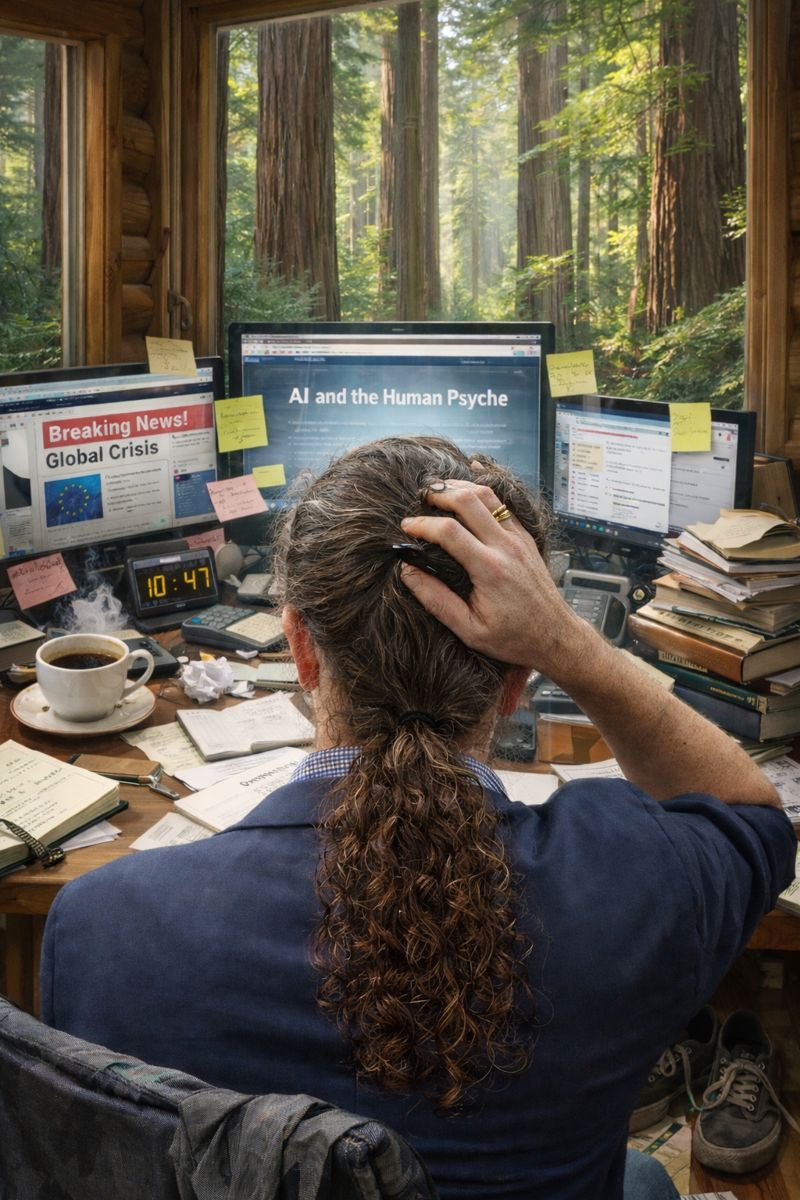
Part survival guide, part dark comedy —
A mental health manual for the Modern Apocalypse
ON SALE NOW!
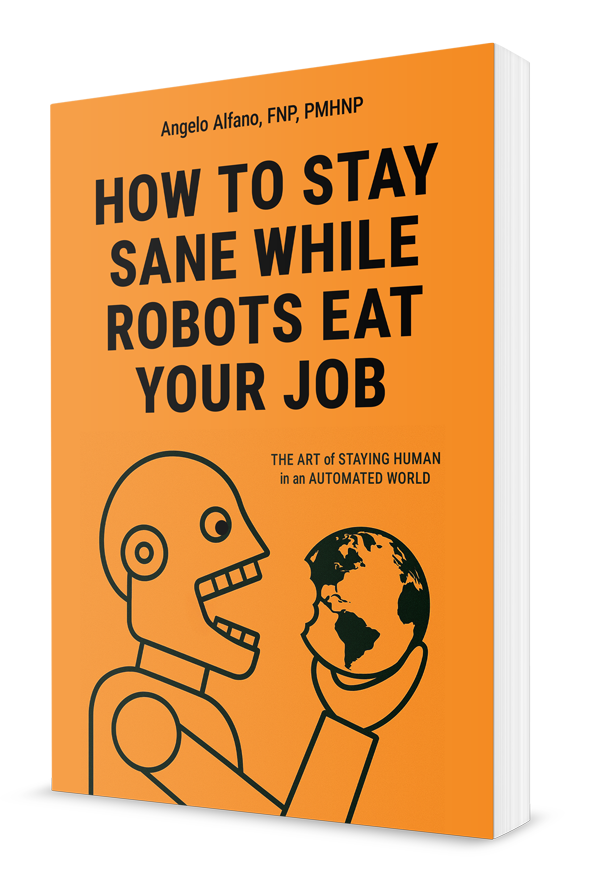
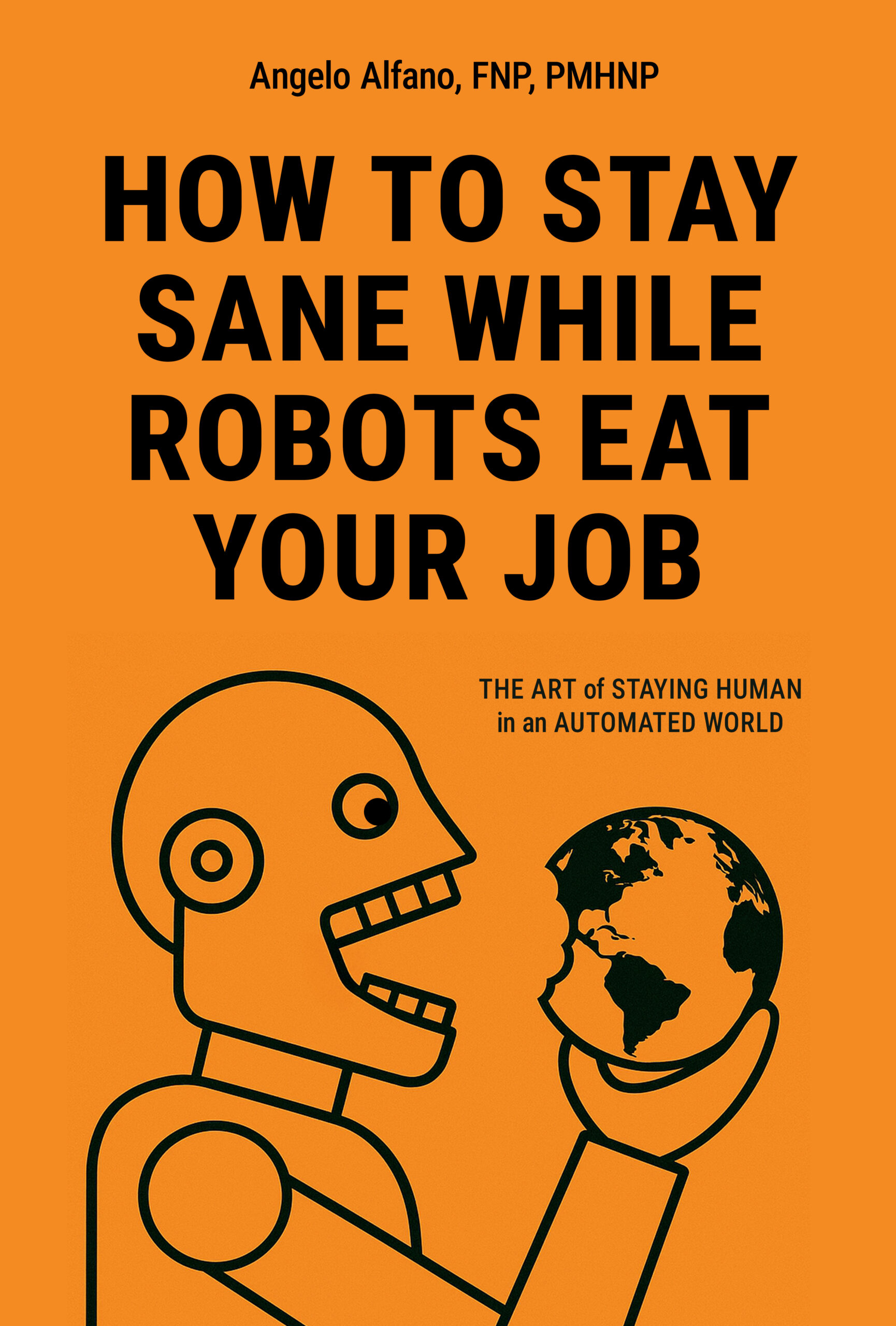
About the Book
How to Stay Sane While Robots Eat Your Job is a clinically grounded, darkly comedic guide to staying emotionally intact during the AI revolution. Packed with evidence-based tools, humor, and practical strategies, it helps readers navigate burnout, identity disruption, and digital overwhelm while building resilience that keeps them human in a world increasingly run by machines.
About the Author
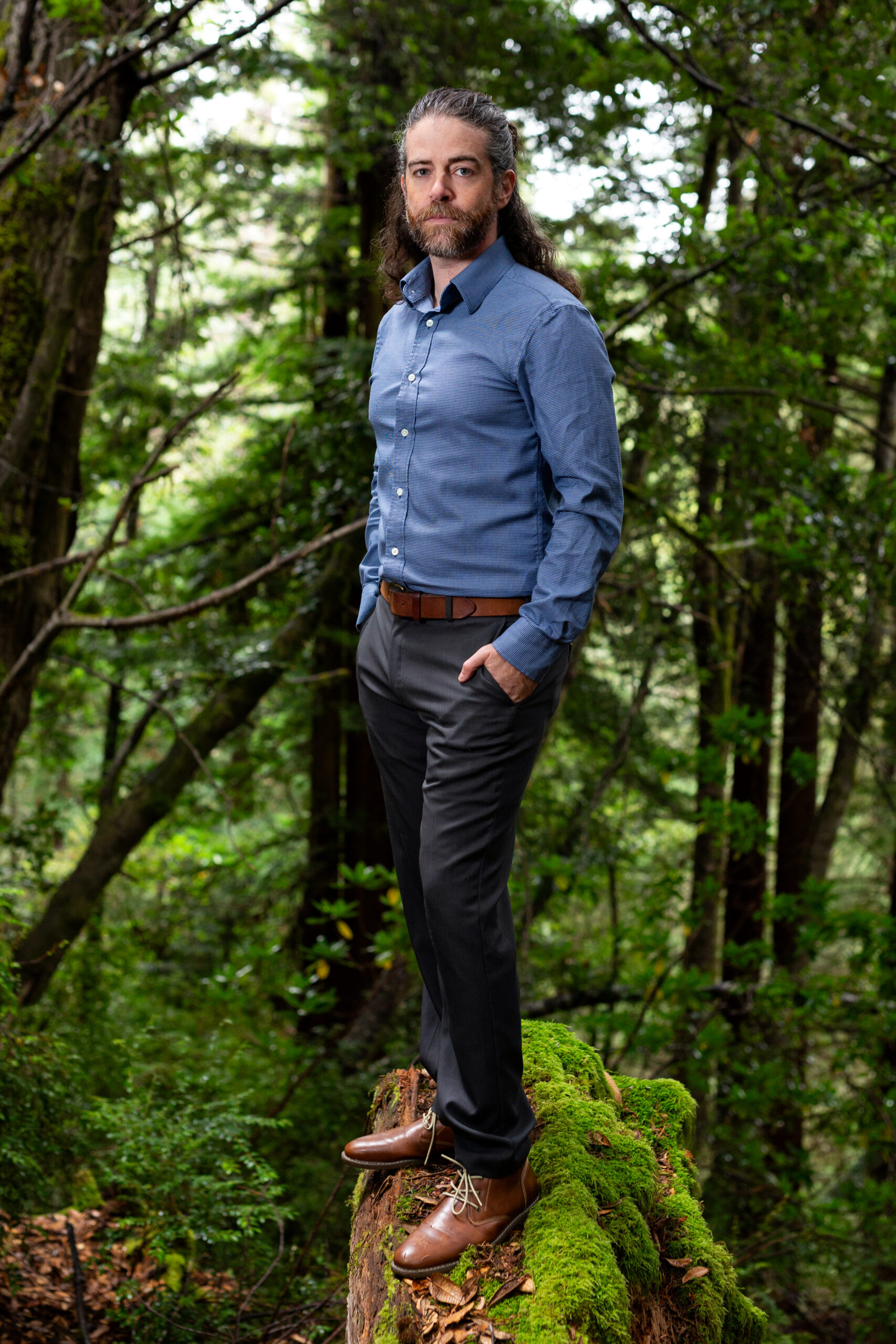
Angelo Alfano is a psychiatric nurse practitioner and author focused on helping people stay grounded in a rapidly changing world. Blending clinical insight, neuroscience, and dark humor, he writes about burnout, resilience, and the psychological impact of AI—often from his homestead in the redwoods of Humboldt County.
About the Author
Angelo Alfano is a psychiatric nurse practitioner and author focused on helping people stay grounded in a rapidly changing world. Blending clinical insight, neuroscience, and dark humor, he writes about burnout, resilience, and the psychological impact of AI—often from his homestead in the redwoods of Humboldt County.
AI Induced Stress Syndrome (AISS)
AI-Induced Stress Syndrome (AISS) is a proposed psychological framework describing patterns of chronic stress, anxiety, cognitive overload, and attention disruption emerging in response to rapid advances in artificial intelligence, automation, and economic change.
It is not a formal psychiatric diagnosis, and it does not replace established conditions like anxiety disorders, depression, or burnout. Instead, AISS names a recognizable cluster of symptoms clinicians are increasingly seeing in people affected by:
- fear of job automation or displacement
- constant exposure to AI-driven news cycles
- pressure to continuously “upskill” to stay relevant
- loss of identity tied to work, expertise, or productivity
At its core, AISS reflects a mismatch between human nervous systems—built for gradual change—and technological shifts happening at unprecedented speed.
In short:
Your brain isn’t broken — it’s responding normally to abnormal conditions.
Traditional burnout usually comes from too much work.
AI-related stress often comes from uncertainty about whether your work — and your role — will matter at all.
What makes AI-driven stress distinct is that it is:
- Ambient – present in the background of daily life
- Anticipatory – focused on future loss rather than current hardship
- Identity-threatening – tied to competence, meaning, and relevance
- Cognitively fragmenting – attention is pulled in too many directions at once
- Hard to resolve – because there’s no single problem to “fix”
Clinically, this often appears as:
- persistent anxiety or unease without a clear trigger
- difficulty sustaining attention or feeling mentally “scattered”
- decision fatigue and slower cognitive processing
- irritability, emotional flattening, or withdrawal
- sleep disruption tied to rumination or doom-scrolling
Many people describe this as “I can’t focus like I used to” or “my attention feels broken.”
In many cases, this reflects chronic stress and cognitive overload, not a lifelong attention disorder.
Quick Self-Check: Could This Be Affecting You?
This is not a diagnostic tool — just a reflection aid.
Check any that resonate over the past few months:
☐ I worry regularly about my job becoming obsolete or less valuable
☐ I feel pressure to constantly learn new tools just to keep up
☐ I struggle to unplug from tech or AI-related news
☐ My attention feels fragmented — I start tasks but can’t stay with them
☐ I feel mentally overwhelmed or cognitively fatigued
☐ My sleep is disrupted by racing thoughts about the future
☐ I feel less motivated or emotionally flatter than I used to
If several of these feel familiar, you’re not alone—and it does not automatically mean you have ADHD.
Stress, uncertainty, and constant digital input can temporarily impair attention and executive function, especially in adults who previously functioned well.
The goal isn’t to self-diagnose —
it’s to understand what’s driving the symptoms so they’re treated appropriately.
Written in the Redwoods: Why I Wrote This Book
I didn’t sit down one morning with a cup of coffee, stretch my arms like some serene novelist, and decide, “Today I shall write a book about artificial intelligence and the unraveling of the human psyche.” That would have been far too organized. The truth is, this book came out of the same chaotic stew everyone else has been swimming in—stress, confusion, too many browser tabs open, and the creeping sense that the world was speeding up while I was still trying to find my shoes...